

Most people searching for fertility test costs expect a simple number. There isn’t one. “Fertility testing” is not a single procedure. It is a collection of separate tests, each measuring a different aspect of reproductive health, each priced differently depending on the type, the facility, and whether insurance applies.
Blood tests sit at the cheaper end: typically $50 to $200. Imaging and structural tests run higher, often $200 to $1,500 or more. Both partners have their own set of relevant tests, and a complete couple’s workup can total anywhere between a few hundred dollars and over $2,500.
This guide covers every major female and male fertility test with current price ranges, what each one measures, how insurance can reduce what you pay, and what a full evaluation actually costs when you add it all up.
Female Fertility Tests and What Each Costs
Female fertility testing covers several different procedures, each looking at a distinct part of the reproductive picture. Here is a quick overview before we go into each one in detail.
| Test | What It Measures | Cost | Timing | At-Home? |
|---|---|---|---|---|
| AMH blood test | Egg supply (ovarian reserve) | $50–$200 | Any time in cycle | Yes |
| FSH blood test | Ovarian reserve indicator | $50–$150 | Day 2–3 of cycle | No |
| Antral follicle count (AFC) | Active follicles in ovaries | $200–$400* | Day 2–5 of cycle | No |
| Saline sonogram | Uterine cavity structure | $200–$500 | After period, before ovulation | No |
| HSG | Fallopian tube patency | $500–$1,500+ | Day 7–10 of cycle | No |
*AFC is frequently bundled into the initial clinic consultation fee rather than billed separately; ask before assuming it is an add-on.
Anti-Müllerian Hormone (AMH) Blood Test
AMH is produced by the follicles in your ovaries. The level in your blood reflects the size of your remaining egg supply, what doctors call ovarian reserve. Higher AMH suggests a larger egg supply; lower AMH points toward diminished ovarian reserve.
Clinic cost is typically $50 to $200. At-home kits from brands such as Modern Fertility bring it toward the lower end of that range: you draw a finger-prick sample and mail it in. No special cycle timing is required, which makes this the easiest test to start with.
Follicle-Stimulating Hormone (FSH) Blood Test
FSH is the hormone your brain sends to stimulate egg development each cycle. When ovarian reserve is low, the brain increases FSH output to compensate; an elevated FSH reading is a sign that your egg supply may be diminishing.
Cost ranges from $50 to $150, and it is often ordered alongside an estradiol (E2) test for a fuller picture. The catch: it must be drawn on day 2 or 3 of your menstrual cycle. Miss that window and you wait until the next one.
Antral Follicle Count (AFC) via Transvaginal Ultrasound
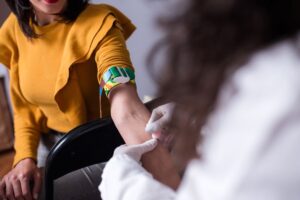
An AFC uses a transvaginal ultrasound to count the small resting follicles visible in both ovaries at that point in the cycle. Each follicle represents a potential egg. Because it shows what is physically present in the ovaries right now, many specialists consider it the most direct measure of ovarian reserve.
If billed as a standalone procedure, expect $200 to $400. In practice, most fertility clinics include it in the initial consultation. Spring Fertility does this alongside a physician review and medical history discussion, so check before paying for it separately.

Saline Sonogram (Uterine Cavity Evaluation)
A saline sonogram involves instilling sterile saline through the cervix to outline the uterine cavity on ultrasound. The goal is to detect structural abnormalities: polyps, fibroids, scar tissue, or anything else that could prevent an embryo from implanting even when ovarian reserve is perfectly normal.
The procedure takes about 10 minutes and is done in a clinic. Mild cramping is common. Cost typically runs $200 to $500 depending on the clinic and whether it is bundled. It is most relevant for anyone preparing for IVF or IUI, or who has experienced recurrent pregnancy loss.
Hysterosalpingogram (HSG) for Fallopian Tube Assessment
An HSG uses a low-dose X-ray and radio-opaque dye injected through the cervix to show whether the fallopian tubes are open or blocked. The result has a direct impact on treatment cost: open tubes keep less expensive options like IUI on the table; blocked tubes mean IVF is the required path.
Without insurance, an outpatient HSG typically runs $500 to $1,500. Hospital-based radiology departments can charge $3,000 or more for the same procedure. The good news is that because HSG is classified as a diagnostic procedure (not fertility treatment), many insurance plans cover it. Check your coverage before assuming it is out of pocket.
Male Fertility Tests and What Each Costs
Male factor infertility contributes to roughly half of all cases where a couple struggles to conceive. Testing both partners from the start avoids months of one-sided investigation; male testing is also usually the least expensive part of the entire workup.
| Test | What It Measures | Cost (Clinic) | Cost (At-Home) |
|---|---|---|---|
| Semen analysis | Sperm count, motility, morphology | $50–$300 | $50–$200 |
| Male hormone panel | FSH, LH, testosterone, prolactin | $100–$400 | Not available |
Semen Analysis
A semen analysis measures three things: sperm count (how many), motility (how well they move), and morphology (whether their shape is normal). Together, these tell you whether sperm are likely to reach and fertilize an egg.
At a clinic or fertility lab, the cost runs $50 to $300. At-home kits from brands such as Legacy or YO are available for $50 to $200 and measure count and motility, though a full clinical analysis provides more detailed morphology data that at-home kits cannot match.
The sample is collected after 2 to 5 days of abstinence and results typically come back within a few days. A normal result is strong evidence that male factor issues are not a concern. Abnormal results (low count, poor motility, or irregular morphology) are the trigger for the next step.
Male Hormone Panel
A hormone panel is not usually the first test ordered for men. It typically follows an abnormal semen analysis to investigate why the numbers are off.
The panel covers:
- FSH: reflects how well the testes are producing sperm
- LH: signals sperm production at the hormonal level
- Testosterone: low levels directly suppress sperm development
- Prolactin: elevated levels can interfere with fertility
Cost runs $100 to $400 depending on which hormones are tested and whether they are ordered individually or as a panel. Identifying a hormonal cause matters because some conditions respond to medication, which can improve sperm parameters without moving straight to IVF.

How Much Does a Complete Couple’s Fertility Workup Cost?
A full evaluation for both partners covers separate tests across bloodwork, imaging, and semen analysis. The table below shows what each component typically costs without insurance.
| Component | Tests Included | Typical Cost |
|---|---|---|
| Female bloodwork | AMH + FSH | $100–$350 |
| Female imaging | AFC + saline sonogram + HSG | $900–$2,300 |
| Male semen analysis | Standard clinic analysis | $50–$300 |
| Male hormone panel | FSH, LH, testosterone, prolactin | $100–$400 (if needed) |
| Couple's total | $600–$2,500+ |
The range is wide because the same test carries a very different price tag depending on where you have it done. An HSG at an outpatient fertility clinic in a mid-size city might cost $400 to $600. The same procedure at a hospital-based radiology department in a major metro can run $1,500 to $3,000. Always get a quote from your specific clinic before building a budget around any midpoint figure.
Not everyone needs every test. A healthcare provider will narrow the list based on your age, cycle history, medical history, and overall health. Your actual out-of-pocket fertility test cost could be considerably lower than the full total above.
If you want to start testing without going straight to a fertility clinic, there are a few lower-cost options worth knowing:
- OB/GYN-ordered bloodwork: AMH and FSH can be ordered by a regular OB/GYN and billed as routine diagnostic lab work, often covered by standard insurance without a fertility referral or specialist visit
- Walk-in labs: Labcorp OnDemand and Walk-In Lab offer AMH testing for roughly $100 to $150, no doctor’s visit required
- Planned Parenthood: Some locations offer hormone testing at reduced cost for those who qualify based on income
- Bundled consultations: Many fertility clinics include a transvaginal ultrasound with AFC alongside the physician consultation and medical history review for a single initial fee; Spring Fertility structures it this way, which typically works out cheaper than ordering those tests individually
One more thing worth knowing: if fertility treatment follows your diagnostic workup, the costs from that evaluation are generally not billed again as part of treatment. The workup is the first step in a continuum, not a separate expense stacked on top.
At-Home Fertility Tests: What They Cost vs. What You Get
At-home fertility testing has improved significantly. The tests are real, the results are meaningful, and the cost is lower than a clinic visit. Here is what you get for the money, and where the limits are.
| Test Type | What It Measures | Cost |
|---|---|---|
| Female hormone panel (AMH, FSH, LH, estradiol) | Ovarian reserve indicators, cycle hormones | $50–$200 |
| Ovulation predictor kits | Whether ovulation is occurring | Under $20 |
| Male semen analysis kit | Sperm count and motility | $50–$200 |
What At-Home Tests Can Tell You
At-home tests give you a useful baseline. A hormone panel can flag a low AMH result that is worth investigating further. Ovulation predictor kits confirm whether ovulation is happening on a regular cycle. A male semen analysis kit can identify low sperm count or motility before either partner has set foot in a clinic.
That information has real value. Catching an abnormal result early means a faster path to answers and earlier access to treatment options.
What At-Home Tests Cannot Tell You
There are four things no at-home test can assess:
- Antral follicle count: Requires a transvaginal ultrasound
- Fallopian tube status: Requires an HSG at a radiology or fertility clinic
- Uterine cavity health: Requires imaging to detect polyps, fibroids, or scar tissue
- Full sperm morphology: At-home kits measure count and motility; detailed morphology analysis requires a lab
If the question is whether to try at-home first or go straight to a clinic, age and history are the deciding factors. At-home testing makes sense if you are under 35, have regular cycles, have no known reproductive health history, and are not yet ready to commit to a clinic visit. Skip straight to the clinic if either partner is over 35, cycles are irregular, there is a history of PCOS, endometriosis, or prior to cancer treatment, or you have already been trying without success for several months.
At-home tests are a lower-cost first filter, not a replacement for a full clinical workup. A normal at-home result does not rule out the structural issues that only imaging can find.
Does Insurance Cover Fertility Testing?
Insurance coverage depends on your plan, your state, and how the tests are coded. Here is a breakdown of what is commonly covered and how to reduce what you pay out of pocket.
Coverage splits roughly along diagnostic vs. fertility-specific lines:
- AMH and FSH bloodwork: Often covered when ordered by an OB/GYN under standard diagnostic codes, not flagged as fertility-specific
- Semen analysis: May be covered as a routine diagnostic lab test depending on the plan; worth checking before paying out of pocket
- Transvaginal ultrasound and AFC: More variable; some plans cover diagnostic imaging, others require prior authorization or deny fertility-related ultrasounds outright
- HSG: Commonly covered because it is classified as a diagnostic radiology procedure rather than fertility treatment; prior authorization is often required, so call before scheduling
Coverage also varies significantly by state. Several states mandate insurance coverage for fertility diagnostics or treatment; most do not. Call your insurer and ask specifically whether each test is covered under diagnostic codes or fertility codes. That distinction alone can determine whether you pay $0 or $1,500 for the same procedure.

How to Reduce Out-of-Pocket Fertility Testing Costs
Even without comprehensive insurance, there are several ways to bring the total down significantly before you set foot in a clinic.
Start With Your Regular Doctor
An OB/GYN can order AMH and FSH bloodwork and bill it as routine diagnostic lab work. No fertility referral is needed, and it is far more likely to be covered under a standard health plan than the same tests ordered at a fertility clinic. For many people, this is the lowest-cost entry point into fertility testing: you get the two most informative hormone markers for potentially nothing out of pocket, and you only move to a specialist if those results warrant it.
Walk-in labs such as Labcorp OnDemand and Walk-In Lab offer AMH testing for $100 to $150 without a doctor’s visit at all, which works well if you want a quick baseline before any clinic appointment.
Ask About Billing Codes Before Every Test
How a test is coded on your insurance claim often determines whether it is covered. Fertility-specific codes are denied far more frequently than general diagnostic codes. The same transvaginal ultrasound or HSG can be billed under a diagnostic code (covered) or a fertility code (denied), and that choice is made by the ordering physician at the point of billing.
Before any imaging or procedure, ask your doctor whether they can use general diagnostic codes where medically accurate. This is not manipulating the system; it is correct coding when the clinical reason is diagnostic. It matters most for HSG, transvaginal ultrasound, and AFC.
Compare Facility Prices Before You Schedule
The same procedure carries very different price tags depending on where it is performed. An HSG at an outpatient fertility clinic might cost $400 to $700. The same procedure at a hospital-based radiology department in the same city can run $1,500 to $3,000. Call two or three facilities and ask for an itemized estimate before you book.
For bloodwork, prices vary significantly between facilities too. A lab draw ordered through your OB/GYN and processed through a commercial lab is typically cheaper than the same panel drawn and processed at a specialty fertility clinic.
Use FSA and HSA Accounts
Fertility diagnostic tests are FSA and HSA eligible. That means you are paying with pre-tax dollars, which effectively reduces your out-of-pocket cost by your marginal tax rate. For someone in the 22% bracket, a $500 HSG costs closer to $390 in real terms.
Bundled initial consultations are also worth asking about directly. Many fertility clinics include the physician consultation, medical history review, and transvaginal ultrasound with AFC in a single initial fee. That package is almost always cheaper than ordering those components separately, and it gives you a full picture in one visit.
If treatment costs become a factor beyond testing, platforms like Sunfish aggregate fertility grants, loans, and discounts in one place and are worth reviewing before assuming the full expense falls on you. If out-of-pocket costs remain a concern, our fertility financing options can help spread the expense across time.
Check Your Employer Benefits
Fertility benefits are increasingly common as a workplace perk, and they can cover diagnostic testing costs entirely, independent of your standard health insurance. Platforms like Carrot allow employers to offer fertility benefits that employees can apply directly to testing and treatment. Some employers partner with clinic networks like Kindbody to provide covered fertility care as part of their benefits package.
Check your HR portal or benefits documentation before assuming fertility testing is fully out of pocket. If your employer uses either of these platforms, you may have access to funding that bypasses standard insurance restrictions altogether.
When Should You Get a Fertility Test?
Standard clinical guidelines give you a starting point, but they are not the only trigger worth knowing about.
The baseline recommendations by age:
- Under 35: See a doctor after 12 months of trying without success
- Ages 35 to 40: After 6 months
- Over 40: Proactive evaluation before you start trying, or immediately upon starting
These guidelines assume you have no known risk factors and regular cycles. If either of those is not true, the timeline shortens regardless of age.
Get tested earlier if any of the following apply to either partner:
- Irregular or absent menstrual cycle
- Diagnosed or suspected PCOS or endometriosis
- Prior cancer treatment (chemotherapy or radiation can affect ovarian reserve and sperm production)
- Family history of early menopause
- Known or suspected male factor history
You also do not need to be actively trying to conceive to justify testing. Anyone considering egg freezing, or who simply wants to understand their baseline before starting to try, can get tested now. The cost of a diagnostic workup is fixed; the cost of delayed treatment is not. Finding out your ovarian reserve is lower than expected at 32 is a very different situation from finding out at 38.
When you do decide to test, starting with a semen analysis is often the fastest and cheapest first step for couples. It is non-invasive, results come back quickly, and it rules out male factor issues before anyone undergoes more involved procedures. Both partners testing at the same time gives you the full picture from the start and avoids working through one side sequentially only to discover the other was the primary issue.
The Bill for Waiting Grows Faster Than You Think
Ovarian reserve declines with age, and that decline accelerates after 35. A woman with borderline reserve at 32 may have significantly diminished reserve at 36. The window for less invasive treatment options closes faster than most people expect.
The cost of fertility treatment rises sharply with each step up the ladder:
- Timed intercourse: No cost.
- Intrauterine Insemination (IUI): $1,000 to $3,000 per cycle.
- IVF: $15,000 to $25,000 per cycle.
- Donor egg IVF: $40,000 or more.
Each step up is triggered by a narrowing window. Testing early keeps the cheaper rungs within reach. Waiting until conception has not happened for a year or more can mean skipping several of those rungs entirely.
Couples who test proactively and find normal results lose nothing except a few hundred dollars and gain a clear baseline. Couples who wait and discover a problem later consistently say the same thing: not that the outcome would have been different, but that earlier knowledge would have meant more options.
Schedule an appointment at our clinic to find out where you stand before time decides for you.

Eliran Mor, MD
Reproductive Endocrinologist located in Encino, Valencia & West Hollywood, CA
Reproductive Endocrinologist located in Encino, Valencia & West Hollywood, CA Doctor Mor received his medical degree from Tel Aviv University-Sackler School of Medicine in Israel. He completed a four-year residency in Obstetrics and Gynecology at New York Methodist Hospital in Brooklyn, New York. Subsequently, Dr. Mor completed a three-year fellowship in Reproductive Endocrinology and Infertility […]


